Hitchcock Review: Number Seventeen (1932)
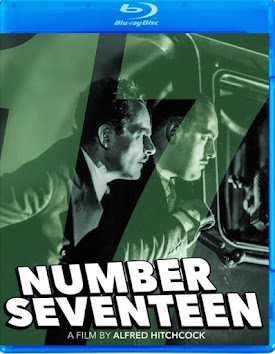
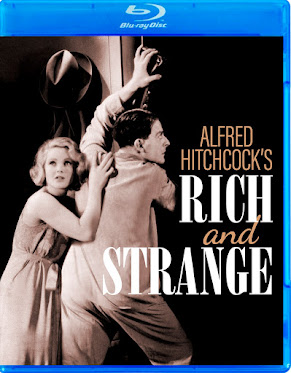
Following immediately on the heels of 1931's Rich and Strange , Hitchcock's Number Seventeen (1932) is an altogether different beast than its predecessor. Based on a play (which was based on a book), the story is mostly a comedic mystery that takes place in an empty house. The first half of the movie brings together a group of unidentified characters, who have converged upon the central location of the story for reasons that reveal themselves as the story unfolds. We have an inspector, a jewel thief, a hobo, a deaf mute, a corpse and the corpse's daughter, with performances by John Stuart, Ann Grey, Leon M. Lion, and several other British character actors of the early 1930s. Putting together the who, what, when, where, and why is most of the fun of the film. The rest of the fun comes during the latter half of the movie, which is essentially one massive chase sequence set on and around a train. Using a series of elaborate miniatures, Hitchcock stages a huge action scene ...